
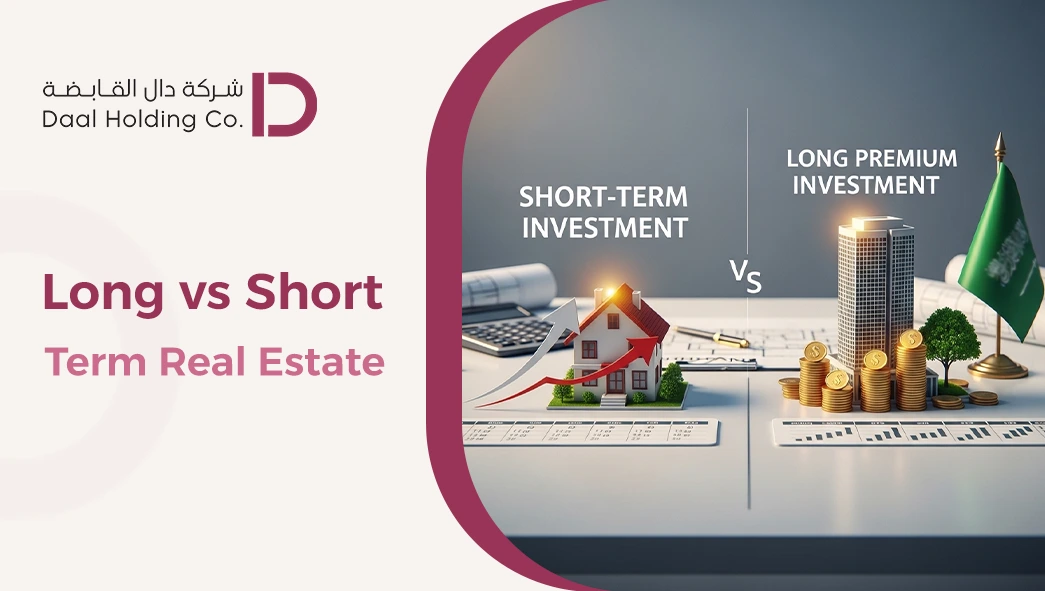
عندما يفكر المستثمر في دخول السوق العقاري السعودي، يظهر سؤال حاسم منذ البداية: الاستثمار العقاري طويل المدى أم قصير المدى؟
الفرق بين الاستراتيجيتين لا يتعلق فقط بمدة الاحتفاظ بالعقار، بل يمتد إلى مستوى المخاطر، طبيعة العوائد، حجم الجهد المطلوب، ونوع العقار المناسب سواء كان استثمار سكني أو استثمار تجاري.
بعض المستثمرين يفضلون الاحتفاظ بالعقار لسنوات لتحقيق نمو تدريجي ودخل سلبي مستقر، بينما يسعى آخرون لتحقيق أرباح أسرع من خلال إعادة البيع أو التطوير قصير الأجل. في هذا المقال سنقارن بين الطريقتين بشكل عملي، مع تحليل المزايا والمخاطر، وتوضيح متى يكون كل خيار هو الأنسب لك في السوق السعودي.
ما المقصود بالاستثمار العقاري طويل المدى وقصير المدى؟
قبل المقارنة، من المهم فهم الفارق بين النموذجين، الاستثمار العقاري طويل المدى يعني شراء عقار والاحتفاظ به لعدة سنوات بهدف:
- تحقيق دخل إيجاري منتظم.
- الاستفادة من ارتفاع قيمة العقار بمرور الوقت.
- بناء أصل ثابت ضمن المحفظة الاستثمارية.
أما الاستثمار العقاري قصير المدى فيعتمد على:
- شراء عقار بسعر منخفض نسبياً.
- تطويره أو تحسينه.
- إعادة بيعه خلال فترة قصيرة لتحقيق ربح سريع.
الاختلاف هنا جوهري؛ الأول يركز على الاستقرار والنمو التدريجي، بينما الثاني يعتمد على سرعة التنفيذ وحركة السوق. لذلك، عند طرح سؤال الاستثمار العقاري طويل المدى أم قصير المدى يجب التفكير في هدفك الأساسي: هل تبحث عن استقرار أم عن مضاعفة رأس المال بسرعة؟
الاستثمار العقاري طويل المدى: متى يكون الخيار الأذكى؟
في السوق السعودي، يعتبر الاستثمار طويل المدى خياراً شائعاً خاصة في الاستثمار السكني داخل المدن الكبرى مثل الرياض وجدة.
أبرز مميزاته:
- دخل إيجاري مستمر يحقق دخل سلبي منتظم.
- الاستفادة من نمو قيمة العقار مع توسع المدن.
- تقليل تأثير تقلبات السوق قصيرة الأجل.
على سبيل المثال، شقة سكنية في موقع حيوي قد تحقق عائداً سنوياً يتراوح بين 5٪ و7٪، إضافة إلى ارتفاع تدريجي في القيمة خلال 5 إلى 10 سنوات.
هذا النوع من الاستثمار مناسب لمن:
- يبحث عن استقرار مالي.
- لا يرغب في متابعة السوق بشكل يومي.
- يفضل تقليل المخاطر.
لذلك، في سياق المقارنة بين الاستثمار العقاري طويل المدى أم قصير المدى، فإن الخيار طويل المدى يتفوق عندما يكون الهدف هو بناء ثروة تدريجية ومستدامة.
الاستثمار العقاري قصير المدى: متى يحقق أرباحًا أسرع؟
على الجانب الآخر، يعتمد الاستثمار قصير المدى على سرعة اتخاذ القرار وتحليل الفرص. وغالباً ما يرتبط بـ الاستثمار التجاري أو شراء عقارات تحتاج إلى تطوير ثم إعادة بيعها.
مميزاته:
- إمكانية تحقيق أرباح خلال فترة قصيرة.
- الاستفادة من الفجوات السعرية في السوق.
- مرونة في إعادة تدوير رأس المال.
لكن في المقابل، هناك مخاطر أعلى، مثل:
- تغيرات مفاجئة في السوق.
- صعوبة بيع العقار بالسعر المتوقع.
- تكاليف تطوير غير محسوبة.
إذا كان لديك خبرة جيدة في تحليل السوق وقدرة على تحمل المخاطر، فقد يكون الاستثمار القصير مجزيًا. وهنا يصبح السؤال الاستثمار العقاري طويل المدى أم قصير المدى مرتبطاً بمدى خبرتك واستعدادك لتحمل التقلبات.
مقارنة مباشرة بين الخيارين
| العنصر | طويل المدى | قصير المدى |
| الهدف | دخل سلبي ونمو تدريجي | ربح سريع |
| مستوى المخاطر | منخفض إلى متوسط | متوسط إلى مرتفع |
| الجهد المطلوب | أقل بعد الاستقرار | متابعة مستمرة |
| الأنسب لـ | استثمار سكني غالبًا | استثمار تجاري أو تطوير |
| الاستقرار | مرتفع | متغير |
هذه المقارنة تساعد على رؤية الفروق بوضوح قبل اتخاذ القرار.
استثمار سكني أم استثمار تجاري: كيف يؤثر نوع العقار؟
اختيار نوع العقار يلعب دوراً مهماً في تحديد الاستراتيجية، حيث أن الاستثمار السكني غالباً ما يرتبط بالمدى الطويل، لأنه يوفر:
- طلباً مستمراً.
- سهولة التأجير.
- استقراراً نسبياً في العوائد.
بينما الاستثمار التجاري قد يحقق عوائد أعلى، لكنه أكثر حساسية لتقلبات الاقتصاد.
لذلك، عند المفاضلة بين الاستثمار العقاري طويل المدى أم قصير المدى يجب النظر أيضاً إلى نوع الأصل العقاري ومدى استقرار القطاع الذي تستثمر فيه.
أيهما أفضل لتحقيق دخل سلبي مستقر؟
إذا كان هدفك الأساسي هو تحقيق دخل سلبي منتظم، فإن الاستثمار طويل المدى غالباً هو الخيار الأنسب.
السبب بسيط:
- العقار المؤجر يوفر تدفقاً نقدياً شهرياً.
- لا يتطلب بيع الأصل لتحقيق أرباح.
- يسمح بإعادة استثمار الدخل في فرص أخرى.
أما الاستثمار القصير المدى، فهو يركز على الربح من البيع، وليس على تدفق نقدي مستمر.
لذلك، عند المفاضلة بين الاستثمار العقاري طويل المدى أم قصير المدى من زاوية الدخل السلبي، فإن الاستراتيجية طويلة الأجل غالباً ما تكون أكثر استقراراً. وهنا يظهر دور إدارة المحافظ العقارية في توزيع الأصول بشكل احترافي، وتحقيق توازن بين العائد والمخاطر، وضمان استدامة الدخل على المدى الطويل.
كيف تختار الاستراتيجية المناسبة لك؟
قبل اتخاذ القرار، اسأل نفسك:
- هل أبحث عن دخل منتظم أم أرباح سريعة؟
- هل أستطيع تحمل تقلبات السوق؟
- هل لدي وقت لإدارة عمليات بيع وشراء متكررة؟
- هل أفضل استثمار سكني مستقر أم استثمار تجاري بعوائد أعلى؟
- ما هي مدة الاستثمار التي أستطيع الالتزام بها؟
إذا كانت إجاباتك تميل إلى الاستقرار، فالمدى الطويل أنسب، أما إذا كنت تملك خبرة وتحملاً للمخاطر، فقد يناسبك النموذج القصير.
FAQs
هل الاستثمار طويل المدى أقل مخاطرة دائماً؟
ليس دائماً، لكنه غالباً أكثر استقراراً بسبب توزيع المخاطر على فترة زمنية أطول.
هل يمكن الجمع بين الطريقتين؟
نعم، بعض المستثمرين يخصصون جزءاً للاستثمار السكني طويل الأجل وجزءاً لفرص قصيرة الأجل.
أيهما يحتاج رأس مال أكبر؟
يعتمد على نوع العقار، لكن الاستثمار التجاري القصير قد يتطلب سيولة أعلى لتغطية تكاليف التطوير.
الخاتمة: القرار يعتمد على رؤيتك الاستثمارية
الإجابة على سؤال الاستثمار العقاري طويل المدى أم قصير المدى لا تكون واحدة للجميع. الاختيار الصحيح يعتمد على أهدافك، مستوى المخاطر الذي تقبله، ونوع العقار الذي تستثمر فيه سواء كان استثمار سكني أو استثمار تجاري.
إذا كنت ترغب في بناء استراتيجية عقارية متوازنة وتحقيق أفضل عائد ممكن في السوق السعودي، فإن التواصل مع دال القابضة يمنحك استشارة احترافية تساعدك على اختيار المسار الأنسب وتحقيق أهدافك الاستثمارية بثقة.
When an investor considers entering the Saudi real estate market, a critical question arises from the start: long-term or short-term real estate investment?
The difference between these two strategies is not limited to the holding period of a property; it also extends to the level of risk, type of returns, amount of effort required, and the suitable property type, whether it is residential investment or commercial investment.
Some investors prefer holding a property for years to achieve gradual growth and stable passive income, while others aim for faster profits through resale or short-term development. In this article, we will compare both approaches in a practical way, analyze their advantages and risks, and explain when each option may be the most suitable for you in the Saudi market.
What Is Meant by Long-Term and Short-Term Real Estate Investment?
Before making a comparison, it is important to understand the difference between the two models.
Long-term real estate investment means purchasing a property and holding it for several years with the goal of:
Generating consistent rental income
Benefiting from property value appreciation over time
Building a stable asset within an investment portfolio
On the other hand, short-term real estate investment is based on:
Buying a property at a relatively low price
Renovating or improving it
Reselling it within a short period to achieve quick profit
The difference here is fundamental. The first focuses on stability and gradual growth, while the second relies on speed of execution and market movement. Therefore, when asking the question long-term or short-term real estate investment, you must first consider your main goal: Are you looking for stability or rapid capital growth?
Long-Term Real Estate Investment: When Is It the Smartest Choice?
In the Saudi market, long-term investment is a common option, particularly in residential investment within major cities such as Riyadh and Jeddah.
Its key advantages include:
Continuous rental income that generates stable passive income
Benefiting from property value appreciation as cities expand
Reduced exposure to short-term market fluctuations
For example, a residential apartment in a prime location may generate an annual return ranging between 5% and 7%, in addition to gradual appreciation in value over 5 to 10 years.
This type of investment is suitable for investors who:
Seek financial stability
Do not want to monitor the market daily
Prefer lower levels of risk
Therefore, when comparing long-term vs. short-term real estate investment, the long-term strategy often proves superior when the goal is building wealth gradually and sustainably.
Short-Term Real Estate Investment: When Can It Generate Faster Profits?
On the other hand, short-term investment depends on quick decision-making and accurate opportunity analysis. It is often associated with commercial investment or purchasing properties that require renovation before resale.
Its advantages include:
The possibility of generating profits within a short period
Taking advantage of pricing gaps in the market
Greater flexibility in reinvesting capital
However, it also carries higher risks, such as:
Sudden market fluctuations
Difficulty selling the property at the expected price
Unexpected development or renovation costs
If you have strong experience in market analysis and the ability to tolerate risk, short-term investment can be rewarding. In this case, the question long-term or short-term real estate investment becomes closely related to your level of expertise and risk tolerance.
Direct Comparison Between the Two Options
| Factor | Long-Term Investment | Short-Term Investment |
|---|---|---|
| Goal | Passive income and gradual growth | Quick profit |
| Risk Level | Low to moderate | Moderate to high |
| Effort Required | Lower after stabilization | Continuous monitoring |
| Best For | Often residential investment | Commercial investment or development |
| Stability | High | Variable |
This comparison helps clarify the differences before making an investment decision.
Residential vs. Commercial Investment: How Property Type Affects the Strategy
The type of property plays an important role in determining the investment strategy.
Residential investment is usually associated with long-term strategies because it offers:
Continuous demand
Easier leasing processes
Relatively stable returns
Meanwhile, commercial investment may generate higher returns, but it is generally more sensitive to economic fluctuations.
Therefore, when deciding between long-term or short-term real estate investment, it is also important to consider the type of property asset and the stability of the sector in which you invest.
Which Strategy Is Better for Stable Passive Income?
If your main goal is to generate consistent passive income, long-term investment is usually the better option.
The reasons are simple:
A rented property generates monthly cash flow
You do not need to sell the asset to make profit
It allows reinvestment of income into other opportunities
Short-term investment, on the other hand, focuses primarily on profit from resale rather than continuous cash flow.
Therefore, when comparing long-term vs. short-term real estate investment from a passive income perspective, the long-term strategy is generally more stable. This is where real estate portfolio management becomes important, helping distribute assets professionally, balance risk and return, and ensure sustainable income over time.
How to Choose the Right Strategy for You
Before making your decision, ask yourself the following questions:
Am I looking for steady income or quick profits?
Can I tolerate market fluctuations?
Do I have time to manage frequent buying and selling processes?
Do I prefer stable residential investment or higher-return commercial investment?
How long can I commit to holding the investment?
If your answers lean toward stability, long-term investment may be the better choice. However, if you have experience and a higher tolerance for risk, the short-term model may suit you.
Frequently Asked Questions
Is long-term investment always less risky?
Not always, but it is generally more stable because risks are distributed over a longer time horizon.
Can both strategies be combined?
Yes. Some investors allocate part of their portfolio to long-term residential investment and another portion to short-term opportunities.
Which strategy requires more capital?
It depends on the type of property, but short-term commercial investment may require higher liquidity to cover development or renovation costs.
Conclusion: The Decision Depends on Your Investment Vision
The answer to the question long-term or short-term real estate investment is not the same for everyone. The right choice depends on your investment goals, risk tolerance, and the type of property you invest in, whether it is residential investment or commercial investment.
If you want to build a balanced real estate strategy and achieve the best possible return in the Saudi market, contacting Dal Holding will provide you with professional consultation to help you choose the most suitable path and achieve your investment goals with confidence.